If you’re interested in learning another language, the first thing that usually comes to mind is “How do I learn this fast?”
Most people want to know the language without having to go through too much hullaballoo. For quick emergencies, there are plenty of pocket guides with useful expressions to help you while travelling. These guides are useful as emergency mini‑bibles to get you out of trouble while you are on the move; however, they do not help when your goal is to have a real conversation. They are temporary solutions, not long‑term communicative tools.
If you want to develop communicative skills — and you do not want to wait years to achieve them — you need a different approach.
Why do you want to learn a language fast?
Most language learners want the same thing: to enter a conversation, understand what is being said, and respond — instead of standing there with your mouth blocked, unable to participate. The desire is not simply to “know words,” but to use them, to understand others, and to be understood in return.
Imagine finding yourself in a situation where you simply get it — where you understand what is being said around you and can communicate naturally, even if imperfectly. That is the real goal. That is what people mean when they say they want to learn a language “fast.”
This raises an important question: why do we believe language learning must take years? Is it the concept of endless study that discourages us? Is it the perfectionist inside us whispering that we will never get it “right”? Or is it the traditional structure of language courses that makes the process feel slow, heavy, and unnecessarily complicated?
Many people want to learn a language without the stress and strain, even with the multitudinous courses promising efficiency and quality. The real question becomes: what makes language learning seem so difficult in the first place?
My own experience — and why it did not work
I studied several languages rather unsuccessfully. In many ways, they were courses in how not to learn a language fast. The hours of classes sent my head into a state of “I don’t understand.” What did it all mean? What was I saying? Why did it feel like the meaning was always just out of reach?
The pattern was always the same:
“Listen to this conversation. Repeat. Practise the conversation.”
Understanding what we were actually saying seemed to be scheduled for a different class — one that never arrived.
I tried this approach for four languages. It was slow, almost torturous, and yet it did not stop my desire to converse in a language that was not the one I was natively born into. The desire remained strong, even as the methods failed me.
This experience taught me something essential: the problem was not my ability to learn. The problem was the method.
Understanding is the key
Learning a language fast requires learning to understand quickly what is being said.
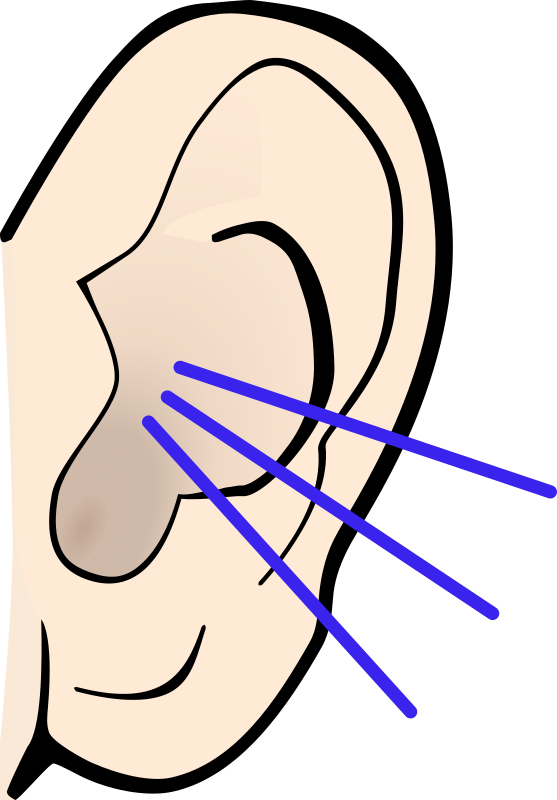
Listen.
Listen to the birds — do their sounds change?
Listen to dogs — do their sounds change?
Can you recognise what an animal is trying to communicate by the tone of its sound production?
Listen to a baby. Before they have a dictionary of words, they still have a sound‑production system that transfers meaning. A baby does not read letters on a page. A toddler produces sounds — imperfect, yes — but still meaningful. Meaning comes before literacy.
Understanding someone is not limited to letters on a page. Reading and writing are best kept as later additions to the learning process. The most natural form of learning is the fastest way to develop active language skills. This method is not only important; it is vital. Unfortunately, this key is often introduced only at higher levels of instruction, reversing our natural learning sequence.
There is a language key — a language code. Understanding how this coding system works is essential, especially in English, where sound and spelling often diverge.
The secret is sound
The secret to learning a language fast is recognising the sounds being used. It really is almost that simple. Almost.
If you skip the essential functional skills of listening and speaking, you will struggle. This may be the missing link for many learners — the link that explains why years of study do not always lead to confident communication.
The “how to” of language learning
To understand what someone is saying, you must learn how to listen — and comprehend what you hear. Without comprehension, there is no understanding.
Does comprehension require memorising every possible word? Is it realistic to memorise a dictionary? Is it even necessary?
Vocabulary building can be a long‑term process. Every region in every country has its own variations. Consider English: what is the difference between a jumper, a sweater, a jersey, a sloppy‑joe, a cardigan, a jacket, and a coat? They are all clothing for warmth; the differences lie in region and style. A learner cannot possibly memorise every variation before they begin to understand.
Consider “the wind” vs “to wind.” Same letters. Different grammar. Different pronunciation. When listening, the difference is obvious. When reading, it is not.
A more effective approach is to learn to recognise sound combinations and how they are produced. Understanding sound production becomes a fast‑track formula for memory retention. When you understand how a word is formed, you remember it more easily.
Sound production and accents
Many people have laughed at how funny a non‑native speaker sounds when trying to speak their language. This often leads to the question: “How do I sound when I try to speak theirs?”
Accents stick. My father learned several languages as a child, and decades later, when he revisited French and German, his childhood accent still showed through. Early sound patterns leave deep impressions.
Accents vary within languages as well. French in France differs from French in Canada. Spanish varies across Spain and South America — even within Spain, every region has its own version of “cerveza.” English is the same: accents within countries, between countries, and then multiplied by non‑native variations.
There is a form of sound production that, once understood, allows learners to jump between accents and comprehend the combinations of sounds that form words. By breaking words into sound codes, learners gain clarity and comprehension far faster than expected. This is not simply about pronunciation; it is about decoding meaning through sound.
✨The sound conclusion ✨
We hear what we want to hear.
We think we understand what we thought we heard.
We believe we heard what we recognised.
Did we truly understand?
Listen again.
Clarity of sound — and improved sound comprehension — is such an important key to learning a language fast that it still surprises me how few courses teach it. While many learners struggle through traditional methods, the sound‑first approach continues its slow but steady journey forward.
I will continue teaching this methodology to my English learners — those who genuinely want to learn to use the language fast.
Till the next Language Grill,
Leonie